Keyhole surgery for cancers in the abdomen
An operation done through several small cuts and a camera, where the tumour and your own history suit that way in.
What it is
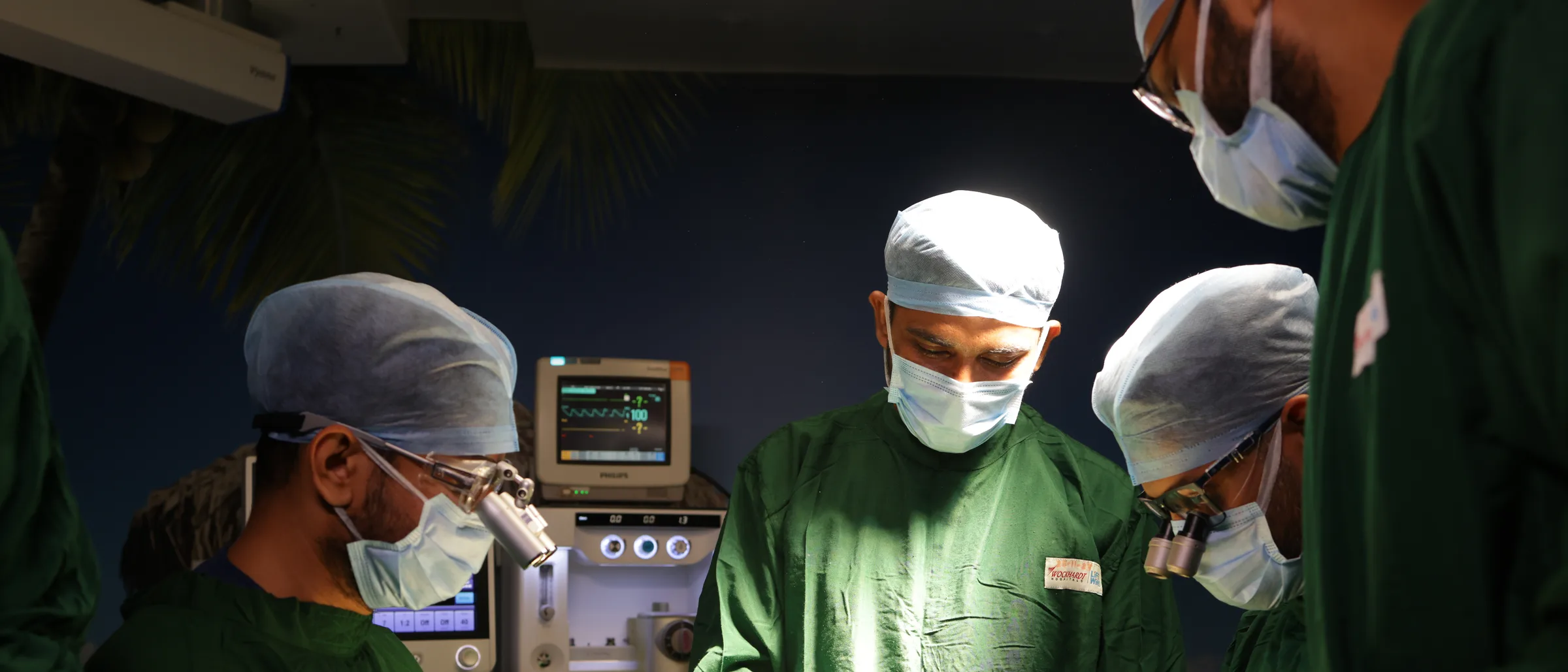
Keyhole surgery means an operation done through several small cuts instead of one long one. The word your doctor uses for it is laparoscopic surgery. A thin camera goes in through one small opening and sends a picture to a screen; the instruments go through the others, and your surgeon works watching that screen. What is done inside is the same operation. The same part of the stomach, the bowel, the uterus or the ovary is removed, with the same lymph nodes around it, and what comes out is read in the same laboratory the same way. What changes is the way in. Where the tumour suits it, several small cuts instead of one long one usually mean less pain afterwards and a shorter stay in hospital. It is not right for every tumour. Whether it suits yours depends on which organ is involved, where the tumour sits, how far it has grown, and what abdominal operations you have had before. Minimal access and laparoscopic cancer surgery is a stated area of work of one of our surgical leads, so where it suits the case it is done here. Where it does not suit, an open operation is the right operation, and your surgeon will explain why in your case.
What happens, step by step
- The decision, taken before the day of surgery.
Whether your operation is keyhole or open is settled in the clinic, not in theatre. Your surgeon reads the scans and the pathology report, asks what abdominal operations or caesareans you have had before, and tells you which way it is planned. Your case has already been through the tumour board, so it is a plan several doctors agreed on. You are also told here that an operation begun as keyhole is occasionally completed as an open one — easier to hear now than afterwards.
- The check-up before the anaesthetic.
A few days before, you see the anaesthetist. Blood tests, an ECG and usually a chest X-ray are done, and your heart, lungs, sugar and blood pressure are checked, because the anaesthetic has to be safe for the body it is given to. Bring every medicine you take, in its own packet: blood thinners, some diabetes medicines and some herbal preparations have to be stopped or changed, and you are told which and from when. If you smoke, stopping now makes a chest infection afterwards less likely.
- The night before, and the morning of.
You are usually admitted the day before, asked not to eat after a stated time — commonly midnight — and not to drink after a later one. Take your morning medicines only if you have been told to. Some bowel operations need a preparation to empty the bowel, and that evening is the uncomfortable part rather than the operation. The consent form is gone through with you: what is planned, what will be removed, what could change. One person from the family should stay, and should know where to wait.
- The anaesthetic.
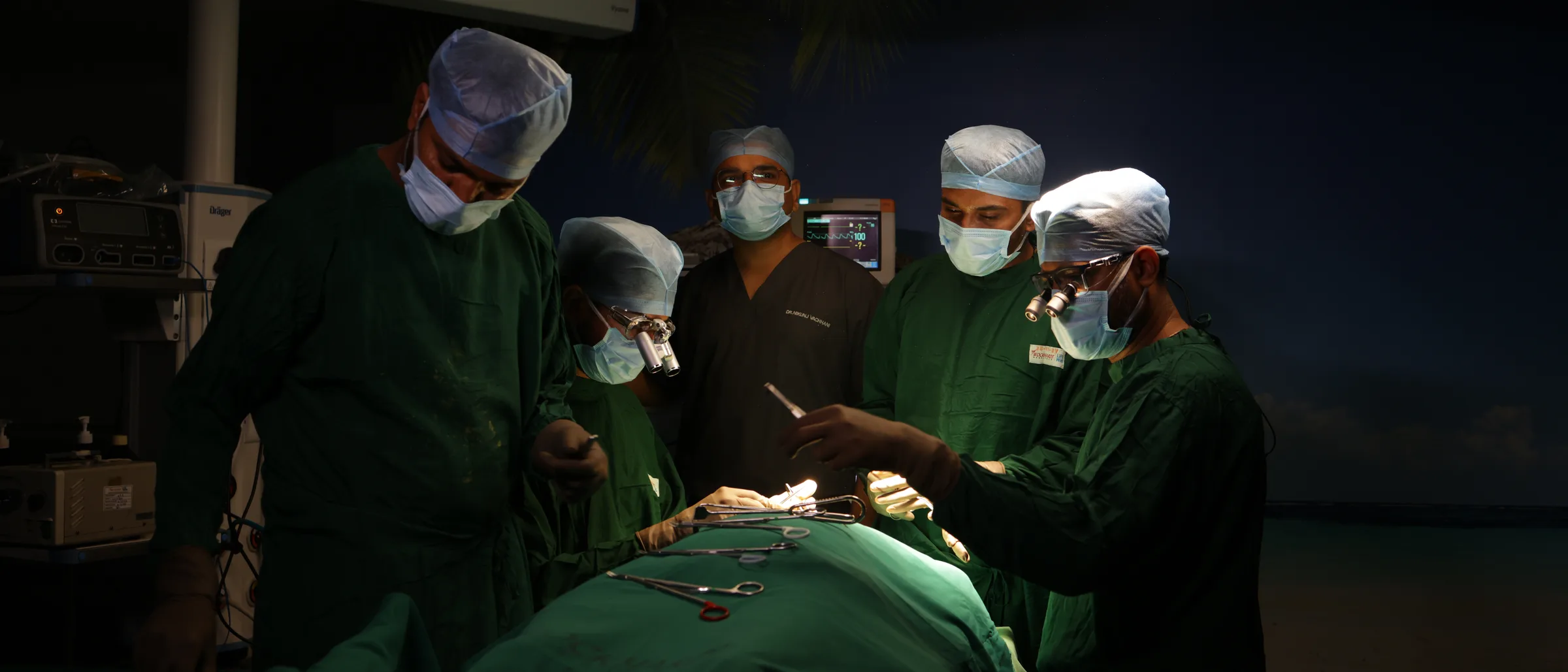
You are taken to theatre on a trolley. The room is cold and bright and there are more people in it than you expect; that is normal. A cannula goes into the back of your hand, monitors go on your chest and finger, and you breathe oxygen through a mask while the anaesthetic goes in. You are asleep within a minute, you will not feel the operation and you will not remember it. A breathing tube is placed after you are asleep, which is why the throat is often sore that evening.
- The operation itself.
Carbon dioxide gas is let into the abdomen to lift the wall away from the organs and make room to work. Three to five small cuts are made, each about the width of a fingernail; the camera goes through one and the instruments through the others. Your surgeon works from the screen, which sits closer to the tissue than the eye could. The tumour, the part of the organ around it and the lymph nodes nearby are freed and taken out, usually through one opening widened a little. The cuts are closed with stitches under the skin, and a soft drain is sometimes left for a day or two.
- If the operation is completed as an open one.
This happens sometimes, and it is a judgement rather than a complication. Scar tissue from an earlier operation may have stuck the organs together, the tumour may be larger or more fixed than the scans showed, or the view may not be good enough to work safely. Your surgeon then changes to a longer cut and finishes the operation that way, because finishing it properly matters more than finishing it through small cuts. You and your family are told afterwards what was found and why it changed. It does not mean the first plan was wrong.
- Waking up, and the first day.
You wake in the recovery area with oxygen on your face and a nurse beside you, and go to the ward once you are awake enough. Expect a sore throat, a dry mouth and pain at the small cuts. The one that surprises people is pain at the tip of the shoulder: that is gas left under the diaphragm irritating a nerve, it has nothing to do with your shoulder, and it settles over a day or two. You will be asked to sip water, to breathe deeply into a small device, and to sit out of bed and take a few steps that evening or the next morning. Being got up early keeps the chest clear and the blood moving.
- The ward, and going home.
Over the next days the drip comes down, the catheter comes out, and you move from sips to liquids to soft food as the bowel wakes up; passing wind is the sign everybody waits for. You go home when you are eating, walking, passing urine and comfortable on tablets rather than injections, and two to four days is what is usually planned for. What was removed goes to the laboratory, and that report — 24 to 48 hours — says whether anything further, such as chemotherapy, is advised. It is discussed with you at the follow-up, not read out over the phone.
How long, and how often
How long the operation takes depends on which organ is involved and how much has to be removed, so no single number fits everybody. Ask your surgeon for the expected time in your case, then tell your family to expect the wait to run longer than that: the anaesthetic beforehand, the positioning and the hour or so in recovery are all real time, and none of it is counted in the operating time. A family expecting the longer figure waits far better than one holding the shorter one against the clock. Admission is usually the day before, and two to four days is the stay normally planned for, moving with which operation you had and how quickly the bowel starts working. At home, the first week is rest, short walks indoors and small meals taken often. The cuts on the outside heal faster than the layers underneath, which is why you are asked not to lift anything heavy and not to strain the abdomen for some weeks; your surgeon will give you the number of weeks. Driving waits until you could brake hard without hesitating. Desk work comes back sooner than work involving lifting or long hours on your feet — ask for a specific answer rather than assuming one. Tiredness lasting a few weeks after an abdominal operation is ordinary. The report on what was removed takes 24 to 48 hours, and if further treatment is advised it usually begins once the wounds have healed rather than in the week after you get home.
Side effects, and the support that comes with them
Expect soreness at each small cut for a week or two, worse when you cough, laugh or get out of bed — holding a folded towel against the abdomen when you cough helps more than it sounds like it should. Bruising around the openings is common. The shoulder-tip pain from the gas is the one nobody warns people about; it is neither a heart problem nor a shoulder problem, and it goes as the gas is absorbed. Bloating and wind are usual for the first days, and the first passing of wind is a good sign rather than an embarrassing one. Nausea after an anaesthetic is common and there is medicine for it, so ask rather than lying still and hoping. Strong painkillers slow the bowel, so constipation is expected and is treated with a laxative rather than endured. Appetite takes a while to return, and small frequent meals go down better than three large ones. Scars are small but permanent, and the skin around them may feel numb for months. Every abdominal operation carries some risk of bleeding, of infection in a wound, of a chest infection, of clots in the legs, and, where the bowel has been joined, of that join leaking. These are not common. They are the reason you are got out of bed early, given breathing exercises, given stockings or blood-thinning injections, and watched for a few days before you go home. Later, a bulge at one of the cut sites — a hernia — can appear months afterwards, which is why the lifting restriction is given a number and meant.
What we use
The equipment for keyhole surgery is a camera, a light source, a screen and long fine instruments. It is worth being plain about who owns it: this practice consults and operates inside hospitals it does not own, so the theatre and its equipment belong to the hospital where your operation is done, and you are told which hospital that is, and why it is that one, before your date is fixed. A camera decides nothing on its own. What decides how your operation goes is whether keyhole was the right choice for your tumour, and that judgement is made in the clinic from your scans, your pathology report and your previous operations. Whichever way in is used, the tissue removed is reported in 24 to 48 hours, and that report is what tells you and your surgeon what the operation achieved. Ask for a copy of your operation note and discharge summary before you leave, and keep them with your scans. Any doctor who sees you later will need to know exactly what was done.
Questions we hear every week
Is keyhole surgery a smaller operation?
Can my cancer be done by keyhole?
The surgeon says it may have to be finished as an open operation. Has something gone wrong?
Will everything be removed?
When can I go back to work and lift things again?
Have a report or a symptom you are unsure about?
Bring it in. If it is nothing, we will tell you it is nothing.
Medically reviewed by The surgical oncology team, Saurashtra Cancer Care, MCh / DNB Surgical Oncology · August 2026