Voice box (larynx) cancer
A hoarse voice that does not settle is the usual first sign, and it is often what brings this one to a doctor while it is still small.
What it is
The larynx — the voice box — sits at the top of the windpipe, behind the raised part you can feel in the front of the neck. It holds the vocal cords, and it closes over the windpipe every time you swallow so that food goes down the right pipe. Cancer here usually starts on the vocal cords themselves. Long-term tobacco in any form is the main cause in this region, and alcohol adds to it. Because even a small growth on a vocal cord changes the voice, this is one of the cancers people tend to notice while it is still small.

Worth getting checked
A doctor should look at any of these if they last longer than two weeks:
- A hoarse or changed voice that does not settle
- A constant feeling of something stuck in the throat
- Pain or difficulty while swallowing
- A lump in the neck
- Noisy breathing, or difficulty getting a breath
- A cough that does not settle, or blood in the phlegm
Most hoarse voices come from an infection, from shouting, or from acid reflux, and they settle. It is the one that does not settle that is worth checking. Finding out takes one appointment.
How we find out
- A look at the voice box.
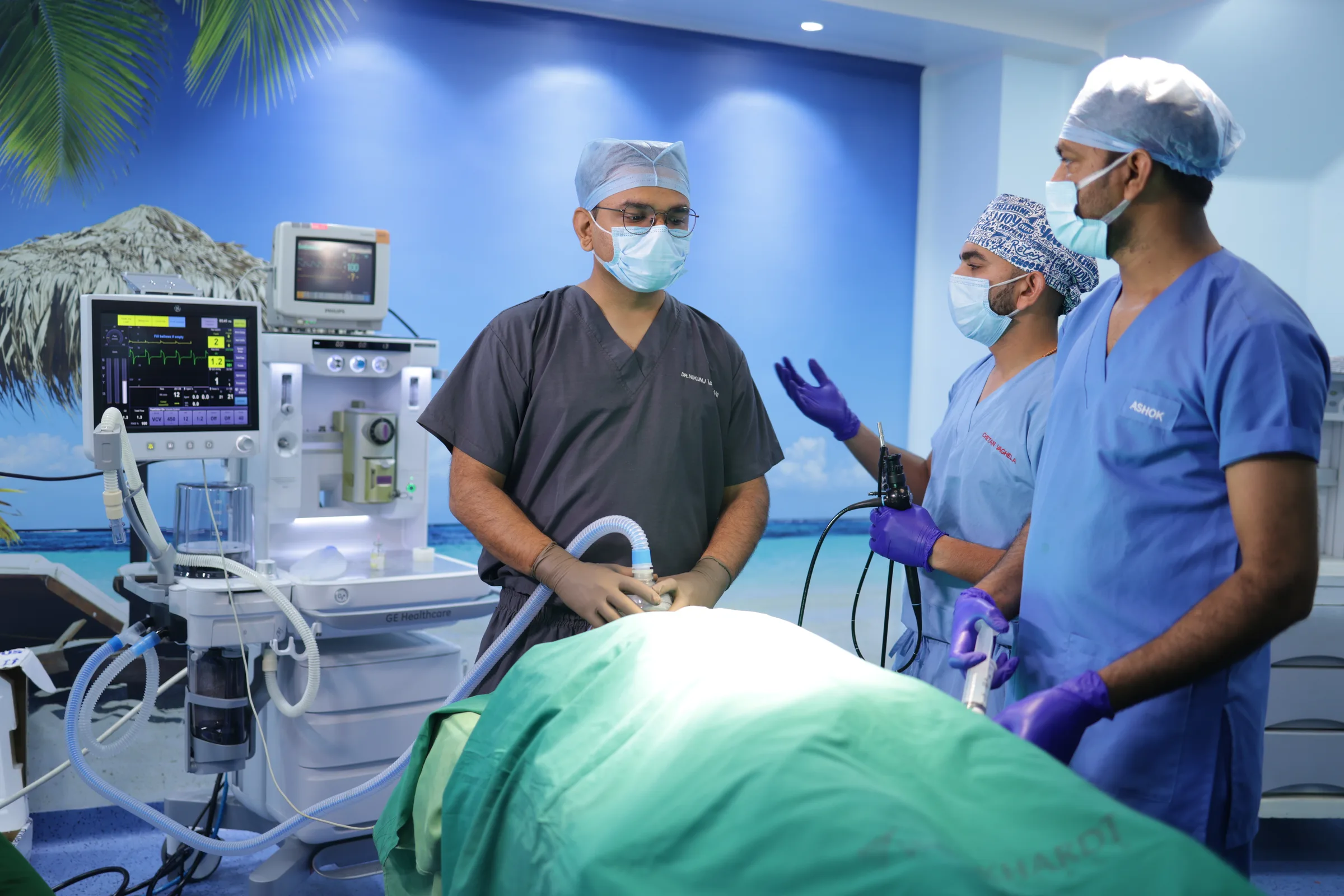
The vocal cords cannot be seen with a torch. A thin flexible camera passed through the nose shows them clearly, and you can speak while the doctor watches them move. The nose is numbed with a spray, you stay awake, and it takes a minute or two.
- A biopsy, usually under anaesthetic.
A small piece of tissue is taken from the growth. Because the voice box is hard to reach, this is often done in theatre under a short general anaesthetic, in the same sitting as a careful look at the whole area. three to five working days for the report.
- Scans, if the biopsy is positive.
A CT or MRI shows how far the growth extends and whether the cartilage around the voice box is involved. That is largely what decides whether the voice box can be preserved.
How it is treated here
- Radiation therapy.
- For many early cancers on a vocal cord, radiation alone is the whole treatment, using a Varian Halcyon linear accelerator. It is given as a course of short daily sessions, and it treats the cancer without removing the vocal cord.
- Surgery.
- The extent depends on the size and the position of the growth. Some small tumours are removed through the mouth. Larger ones may need part of the voice box removed, or all of it, and the lymph nodes in the neck are often removed at the same time.
- Chemotherapy.
- Given alongside radiation in some cases to make the radiation work better, and sometimes before treatment to shrink a tumour.
- Targeted and immunotherapy.
- For specific cases, decided by tumour characteristics.
Whether the voice box can be preserved is one of the first questions the tumour board answers, and it answers it from the scans and the biopsy — not one doctor alone.
What day-to-day life looks like
Honest expectations: your voice will change during treatment, and how much of that stays afterwards depends on what the treatment had to do. Radiation makes the throat sore and the voice tired for several weeks; both usually improve once the course ends. If part or all of the voice box has to be removed, there are ways to speak again — our speech and swallowing therapist starts working with you before the operation rather than after it, so that you know what is coming. If the whole voice box is removed, you breathe through an opening in the neck, and you are taught to look after it before you go home. Most patients continue living at home and come in for sessions. Recovery needs support as well as an operation — with eating, with speech, with movement, and with getting back to ordinary days. Ask your surgeon what yours will need and who can help with it. If you use tobacco, stopping now measurably improves how treatment works — we have a cessation counsellor and it is free.
Questions we hear every week
My voice has been hoarse for a month. Is that cancer?
Will I lose my voice?
Is radiation or surgery the right choice?
Will I be able to eat normally?
I stopped tobacco years ago. Am I still at risk?
Have a report or a symptom you are unsure about?
Bring it in. If it is nothing, we will tell you it is nothing.
Medically reviewed by The surgical oncology team, Saurashtra Cancer Care, MCh / DNB Surgical Oncology · August 2026